Harold Pinter and Robert Louis Stevenson:
A Study of Duality, Power, and the Fragility of Identity.
Harold Pinter and Robert Louis Stevenson, despite working nearly a century apart, share a preoccupation with the instability of human identity and the corrosive effects of power and repression. Stevenson’s Jekyll and Hyde is a foundational text in Western literature’s exploration of the divided self, while Pinter’s works, particularly No Man’s Land and Betrayal, depict characters trapped in psychological, linguistic, and social conflicts that reveal the fragmentation of their own identities.
Both writers explore how human beings construct and deconstruct themselves in relation to others—through deception, repression, and self-delusion. While Stevenson’s Jekyll and Hyde externalises this struggle through a literal transformation, Pinter’s plays represent the same themes through disjointed dialogue, shifting power relations, and the erasure of objective truth. This thesis examines how both authors explore duality, identity, and power through their characters, language, and structural choices.
At the heart of Jekyll and Hyde is a fundamental dualism—the struggle between the socially acceptable self (Jekyll) and the hidden, transgressive self (Hyde). This duality mirrors the tensions in Pinter’s work, where characters often exist in a liminal space between past and present, truth and falsehood, control and submission.
In No Man’s Land, the relationship between Spooner and Hirst is defined by competing identities. Hirst oscillates between moments of lucidity and confusion, at times appearing as a dominant figure and at others as a vulnerable, fading man. This unstable identity reflects the crisis in Jekyll and Hyde, where Jekyll becomes unable to control the emergence of Hyde, just as Hirst loses his grip on his own sense of self. The play’s title itself suggests a limbo, a space between realities, much like Jekyll’s tragic liminality between respectability and destruction.
Similarly, in Betrayal, identity is fractured through its reverse chronology, revealing characters who continuously reconstruct their pasts to suit their own narratives. Just as Jekyll convinces himself that he can control Hyde, Emma and Jerry attempt to manipulate their memories to justify their betrayals. The characters in both texts become unreliable narrators of their own lives, reinforcing the idea that identity is fluid and shaped by external forces.
One of Stevenson’s most striking narrative choices in Jekyll and Hyde is its fragmented structure. The story is told through various perspectives—letters, confessions, and the testimony of other characters—denying the reader a clear, singular truth. This technique prefigures Pinter’s use of ambiguous dialogue, where meaning is obscured, reversed, or deliberately withheld.
In No Man’s Land, language is used as a weapon, much like Jekyll’s scientific discourse masks the horror of his own actions. Hirst and Spooner’s conversations are filled with contradictions, evasions, and cryptic assertions that undermine any stable sense of reality. Pinter’s dialogue creates an atmosphere of uncertainty, mirroring the destabilising effect of Stevenson’s narrative technique in Jekyll and Hyde.
Similarly, Betrayal deconstructs language as a means of understanding truth. The characters speak in fragmented, noncommittal exchanges that obscure rather than reveal their true emotions. This aligns with the way Jekyll rationalises his transformation as an act of scientific curiosity, refusing to acknowledge the deeper moral implications of his actions. In both Stevenson and Pinter, language fails as a tool of clarity and instead becomes an instrument of deception.
Both Jekyll and Hyde and Pinter’s works explore how repression leads to destruction. Jekyll’s attempt to separate his ‘good’ self from his ‘evil’ self is rooted in Victorian anxieties about respectability, but his repression ultimately causes his downfall. Similarly, Pinter’s characters are often caught in cycles of repression, unable to express their desires openly.
In No Man’s Land, Hirst and Spooner exist in a closed-off world, where past traumas and unspoken histories dominate their interactions. The play’s power struggles—between memory and forgetting, dominance and submission—echo Jekyll’s internal war with Hyde. The fear of confronting one’s own past or desires leads to a kind of paralysis, mirroring Jekyll’s descent into inescapable transformation.
In Betrayal, repression takes the form of unspoken betrayals and hidden truths. Much like Jekyll suppresses his darker impulses until they overwhelm him, the characters in Betrayal attempt to conceal their infidelities and emotions until they resurface in destructive ways. Pinter’s characters, like Jekyll, construct identities that ultimately betray them.
Despite their differences in genre and historical context, Harold Pinter and Robert Louis Stevenson share a deep concern with the instability of identity and the dangers of repression. While Stevenson externalises these anxieties through the Gothic figure of Hyde, Pinter internalises them in his fragmented, ambiguous characters. Both authors explore power and control—whether through scientific hubris or linguistic manipulation—ultimately revealing the fragile foundations upon which personal and social identities are built.
By reading No Man’s Land and Betrayal alongside Jekyll and Hyde, we see how Gothic concerns with duality, repression, and the instability of self continue to shape modern literature. Pinter’s worlds, much like Stevenson’s, are haunted by figures struggling to control their own narratives—only to find that their divided selves cannot be contained.
Pete Watt 2025
• • •
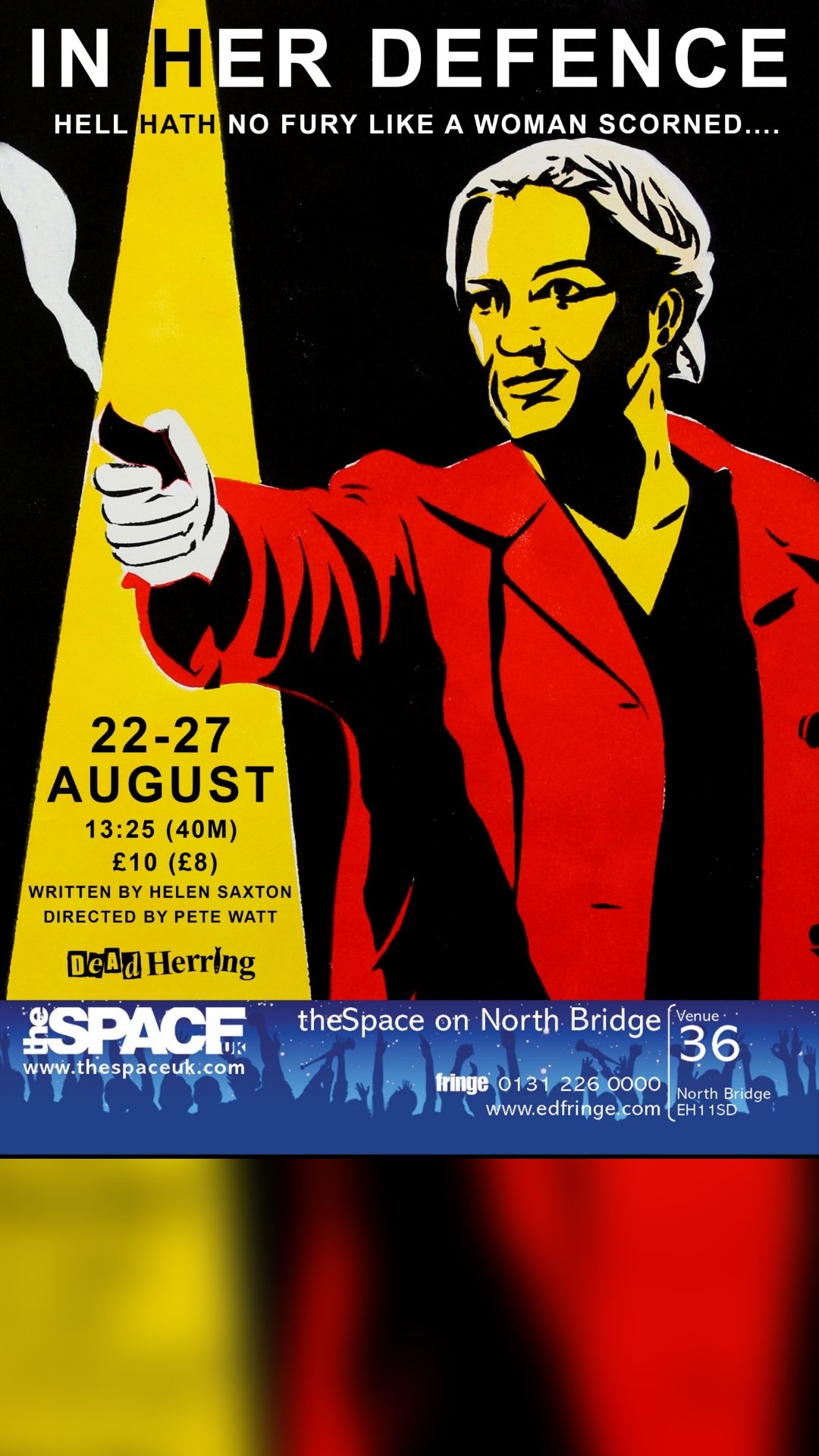
- Pete joins Dead Herring to Direct their Edfringe Debut
- Misadventures in TheatreAbout Me One & One Theatre was born in a coffee shop in New York City, just off-Broadway. It’s conception was years and years of legitmate stealing from other theatre … Continue reading Misadventures in Theatre
• • •